Queer Embodiment & Space
Artistic Research & Other Works

Self-Portraits & Intimation
Curated Projects
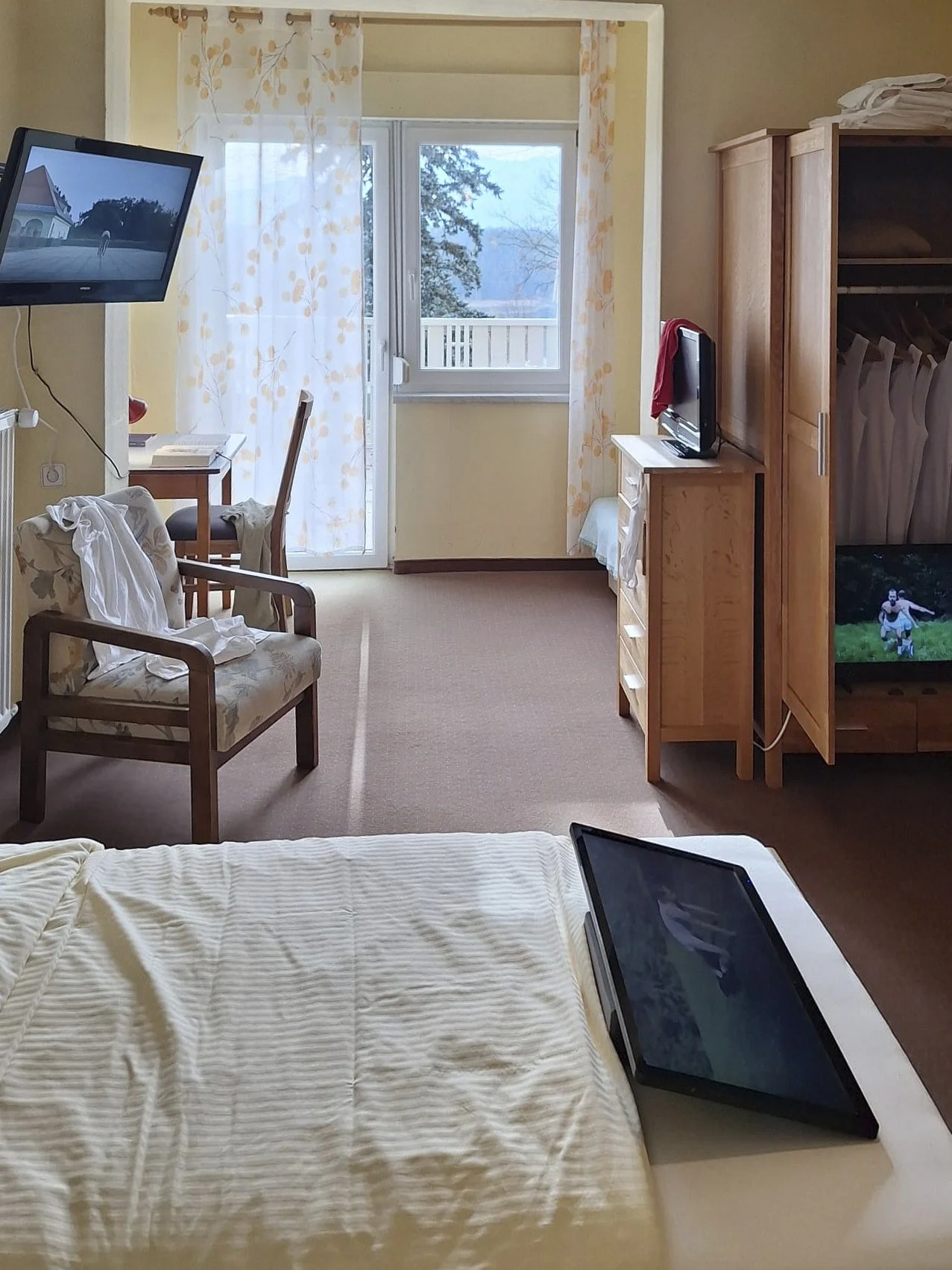
Video installation, currently consisting of five video loops, since 2024
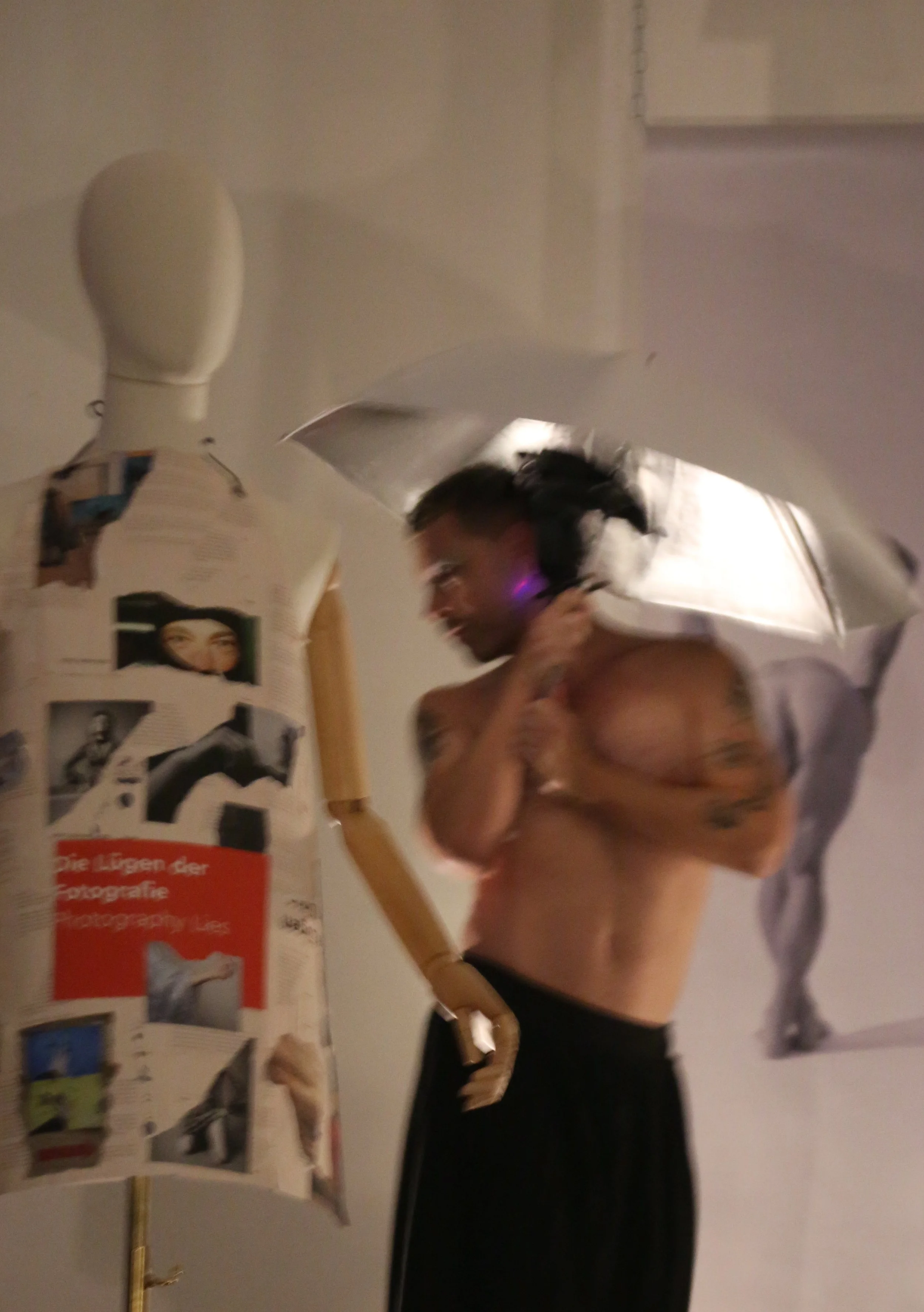
The installation examines how physical culture shapes and constrains the body, from nationalist gymnastics and modern fitness rituals to the subtle regimes of self-optimization. Yet repetition also becomes a site of refusal: gestures slip, slow, exaggerate, falter, become absurd. The body resists its own choreography, queering ideals of strength, purity and control.
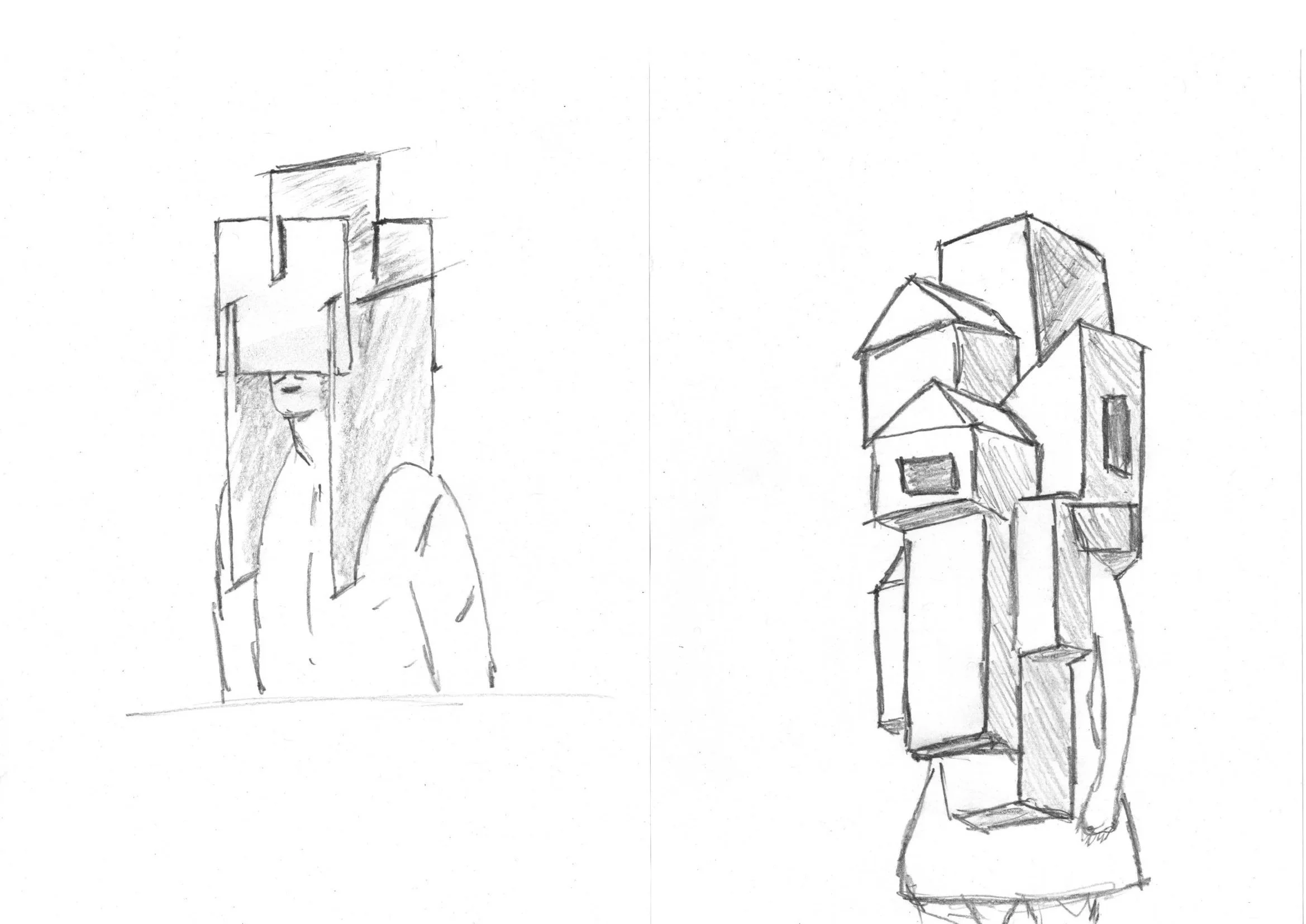
Work-in-Progress: This project explores how systems of architectural design function performatively in space, creating spatial logics through which power, proportion, gender, and normativity are ritualized.


Drawing on lived experience and spatial theory, it explores how queer bodies engage with architecture, publicness, and the everyday choreography of visibility. Rather than simply occupying space, queer embodiment transforms it, revealing how social and physical environments produce, constrain, or allow different forms of being. The essay examines how the body becomes both sensor and sign within space, challenging its implicit norms and proposing new possibilities for presence and belonging.


2019/2021, digital photography, diptych, 3.5 x 4 cm, 1 mm Polystyrol Mounting, Fujicolor Print, 60 x 80 x 1.6 cm coated wood, halogen lamp

This essay introduces Intimation as a conceptual framework for understanding self-portrait photography not as revelation but as construction. Drawing from references across queer and feminist visual culture—Claude Cahun, Francesca Woodman, Friedl Kubelka—it explores the tension between visibility and control, gesture and concealment. Intimation proposes that self-portraiture is not a confession, but a performance in fragments: a way of hinting, never fully stating, what it means to see and be seen.

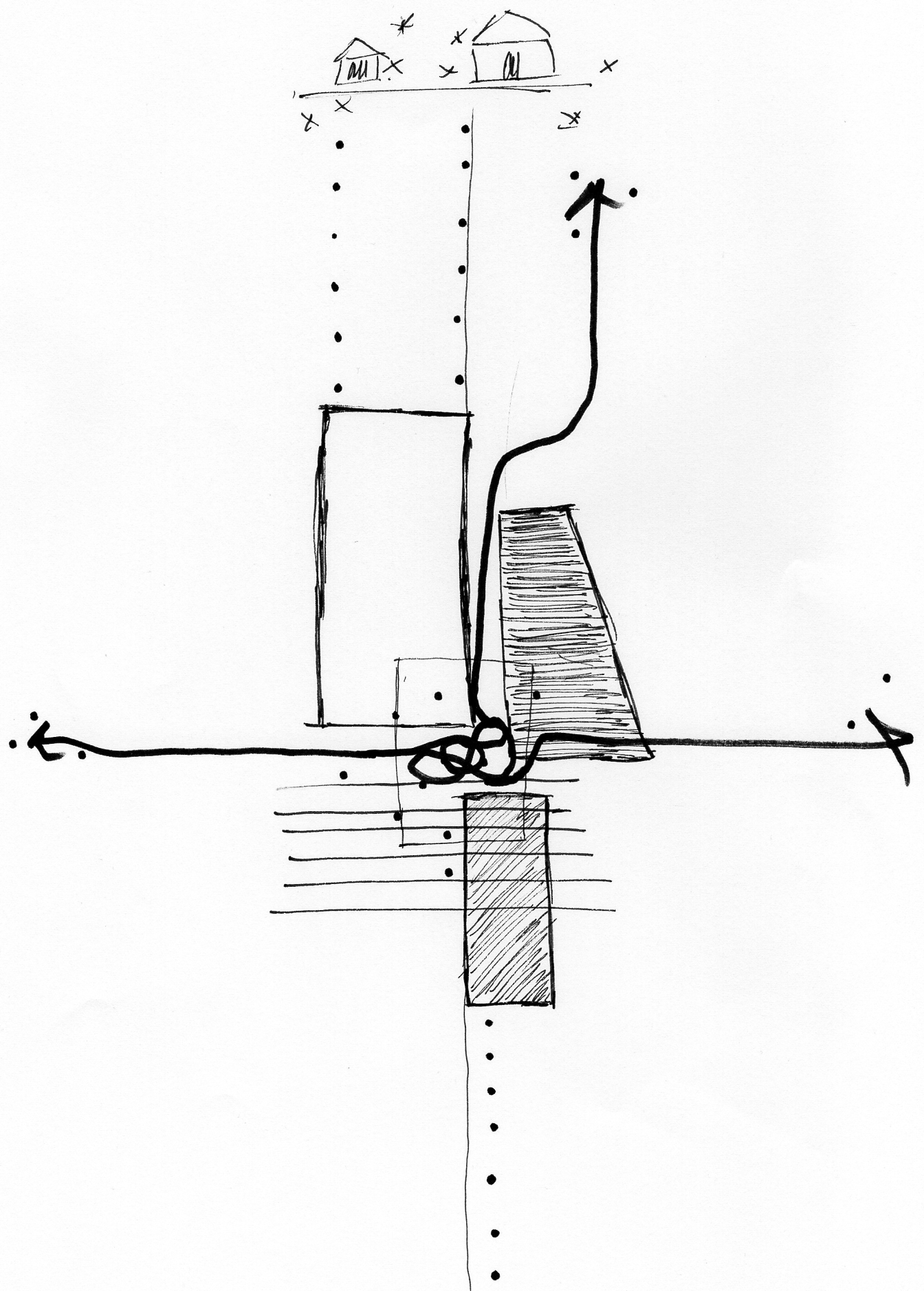
2026, archival research, proposal
Working through “cruising” as a non-linear method of movement and research, I move between landscape and archive, following indirect paths, encounters, and gaps. Walking, performative gestures, and photographic and video documentation are combined with archival research and interventions such as annotation and redaction.
What emerges is not a reconstruction of queer history in the region, but a dispersed counterarchive shaped by absence, where fragments begin to accumulate and reveal how memory persists without fully appearing.
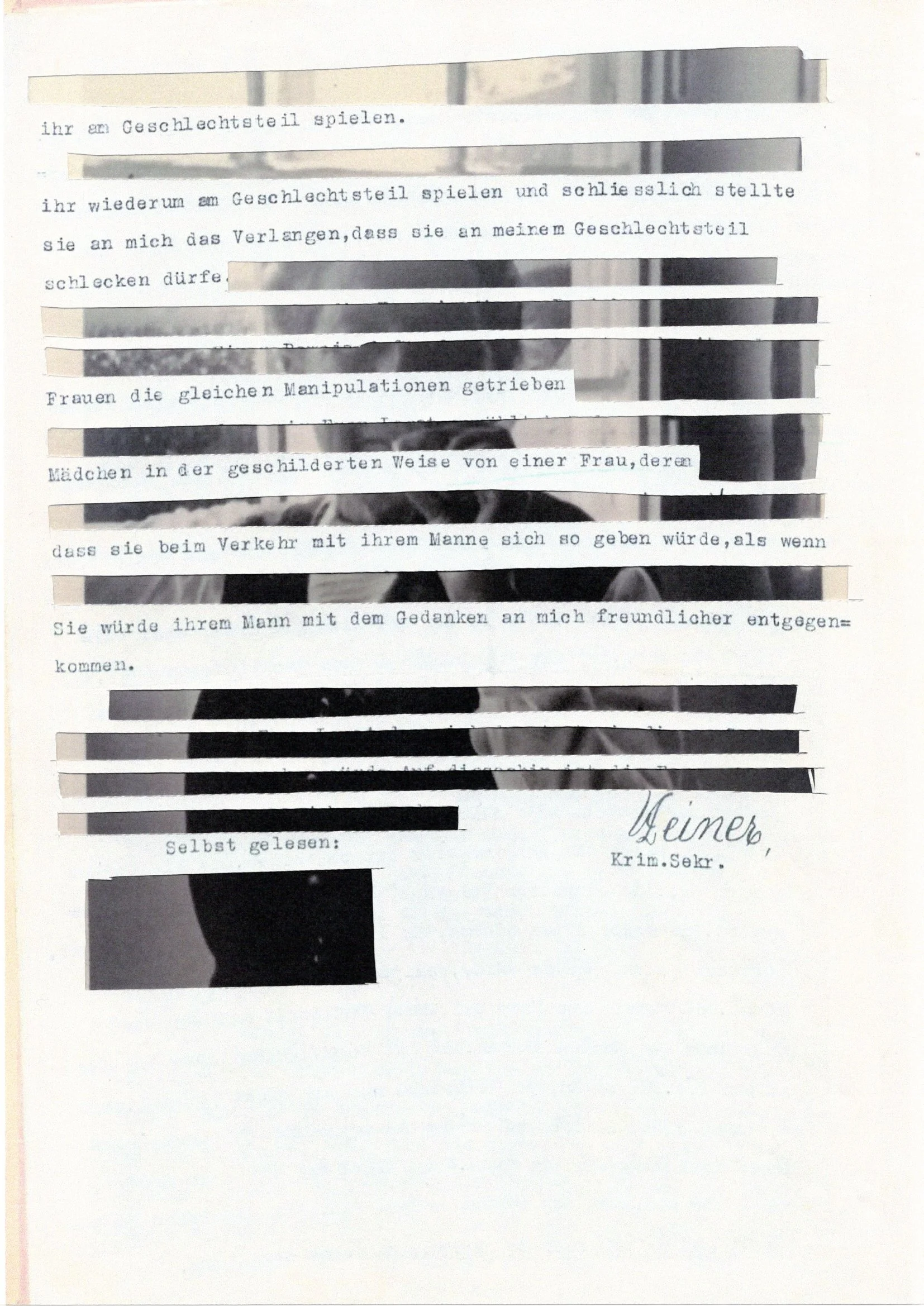
2025, archival research, drawing, paper, pencil, crayon
A new reseach direction of my practice investigates the archival silence surrounding the persecution of homosexual individuals in Carinthia, Austria under National Socialism.

Drawing on performance, self-portraiture, and critical gender theory, the text examines how male-coded embodiment can act not as a return to dominance, but as a site of tension, refusal, and unmaking. The essay reflects on how such bodies—when staged with intention—can disrupt patriarchal norms rather than reproduce them.

While early feminist art reclaimed the female body, queer-feminist practices questioned what “the body” could mean at all. Through performance, abstraction, and coded gesture, queer artists expanded feminist strategies into stranger, more unstable territories. The text reflects on queerness not as identity alone, but as a method of interruption.


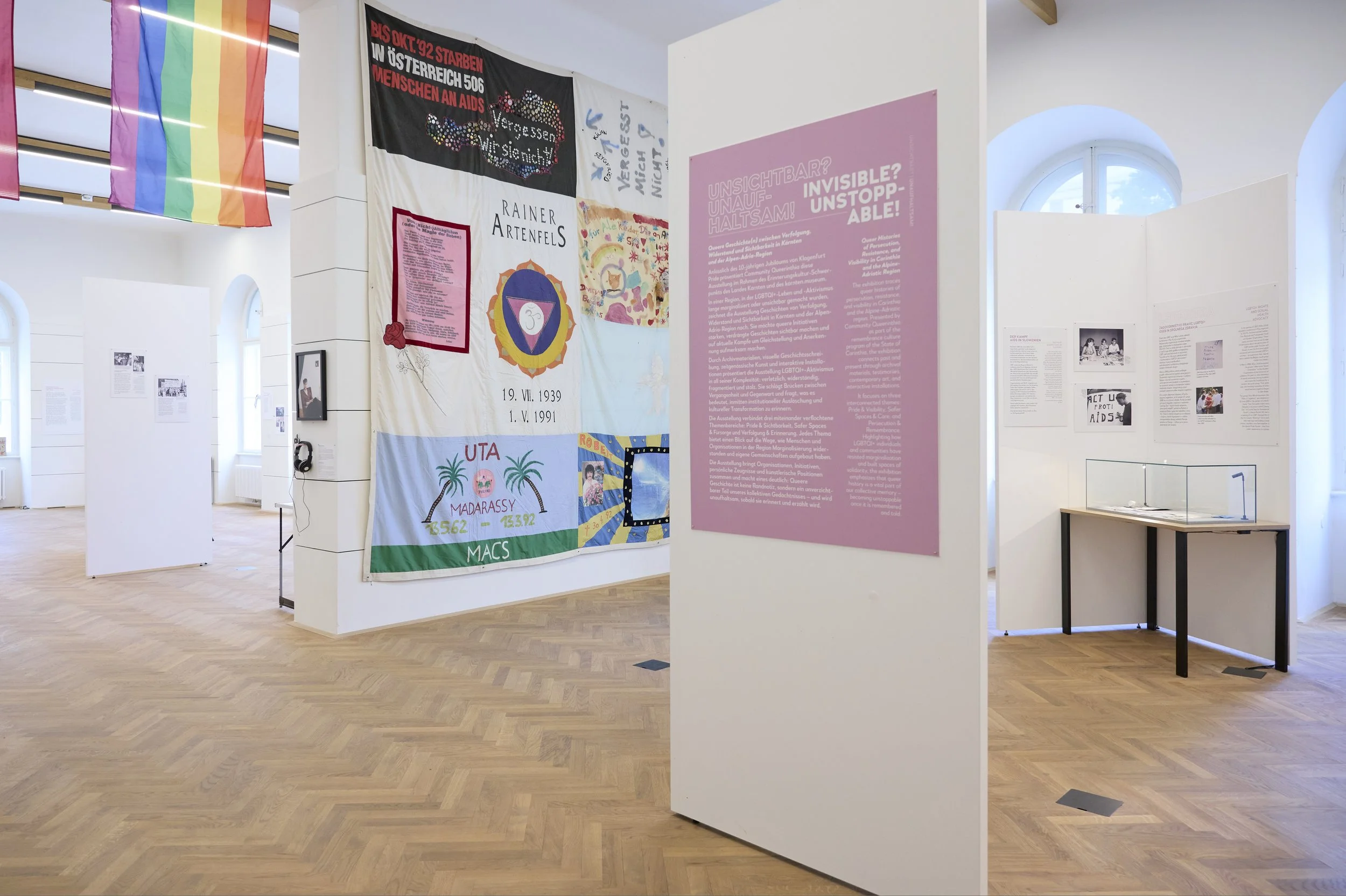
21 May — 29 June 2025, kärnten.museum
Queere Geschichte(n) zwischen Verfolgung, Widerstand und Sichtbarkeit in Kärnten und der Alpen-Adria-Region
Invisible? Unstoppable! Queer History and Stories between Persecution, Resistance and Visibility in Carinthia and the Alpine-Adriatic Region
Nevidni*e? Neustavljivi*e! Kvir zgodovina in zgodbe med preganjanjem, odporom in vidnostjo na Koroškem v Alpsko-Jadranski regiji

12 — 25 October 2024, Minuszwei, Vienna
Jupiter Rhae Braun (AT), Vinko Nino Jaeger (AT), Zoya Laktionova (UA), Naa Teki Martey Lebar (AT), Frederik Marroquín (GT/AT), Danielle Pamp (SW/AT), Damien Rouxel (FR), Francis Ruyter (US/AT), Siggi Sekira (UA/AT), Shiraz Soeker (ZA), Camila Téllez (ES) and Eszter Katalin (HU/AT)